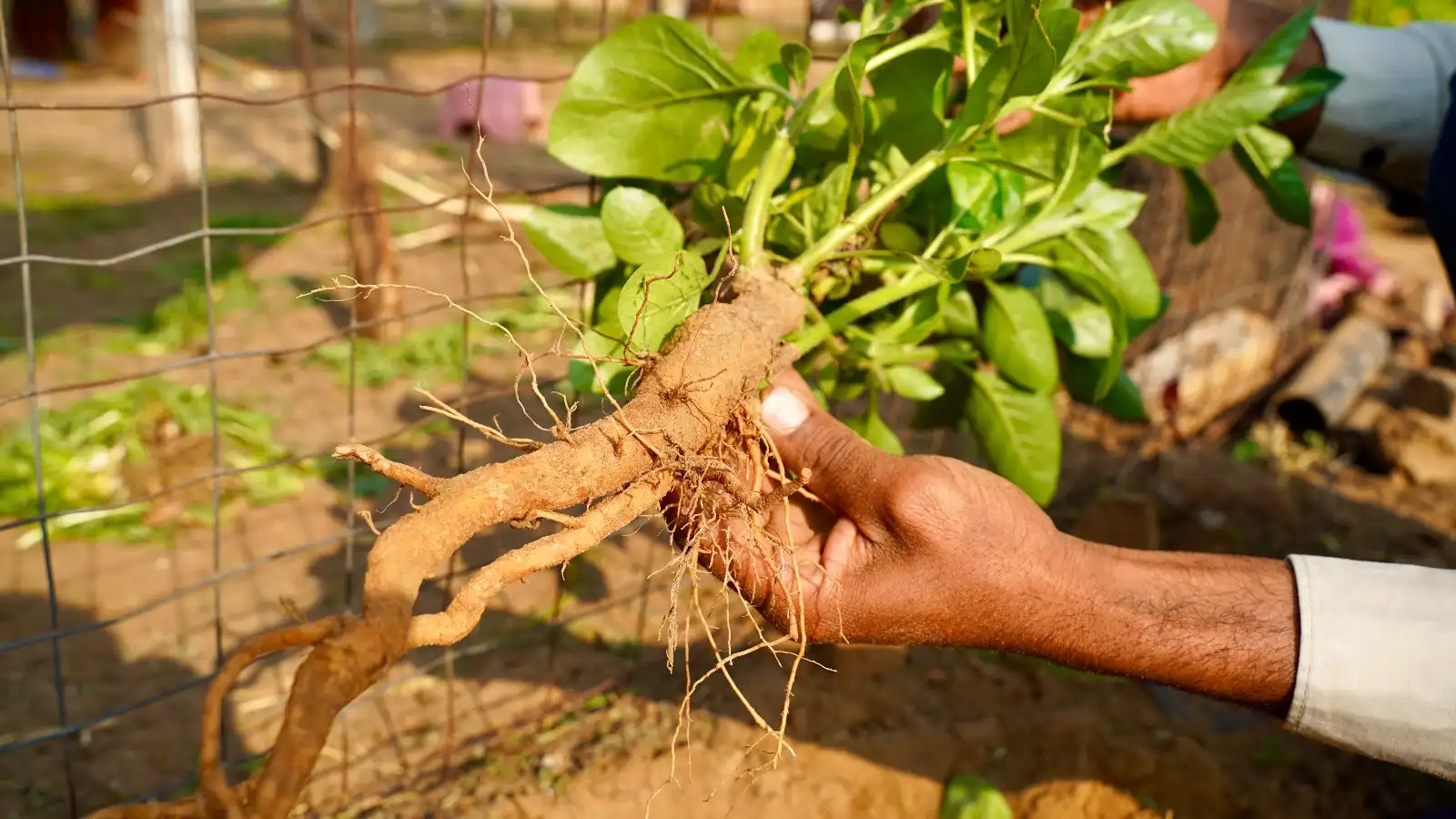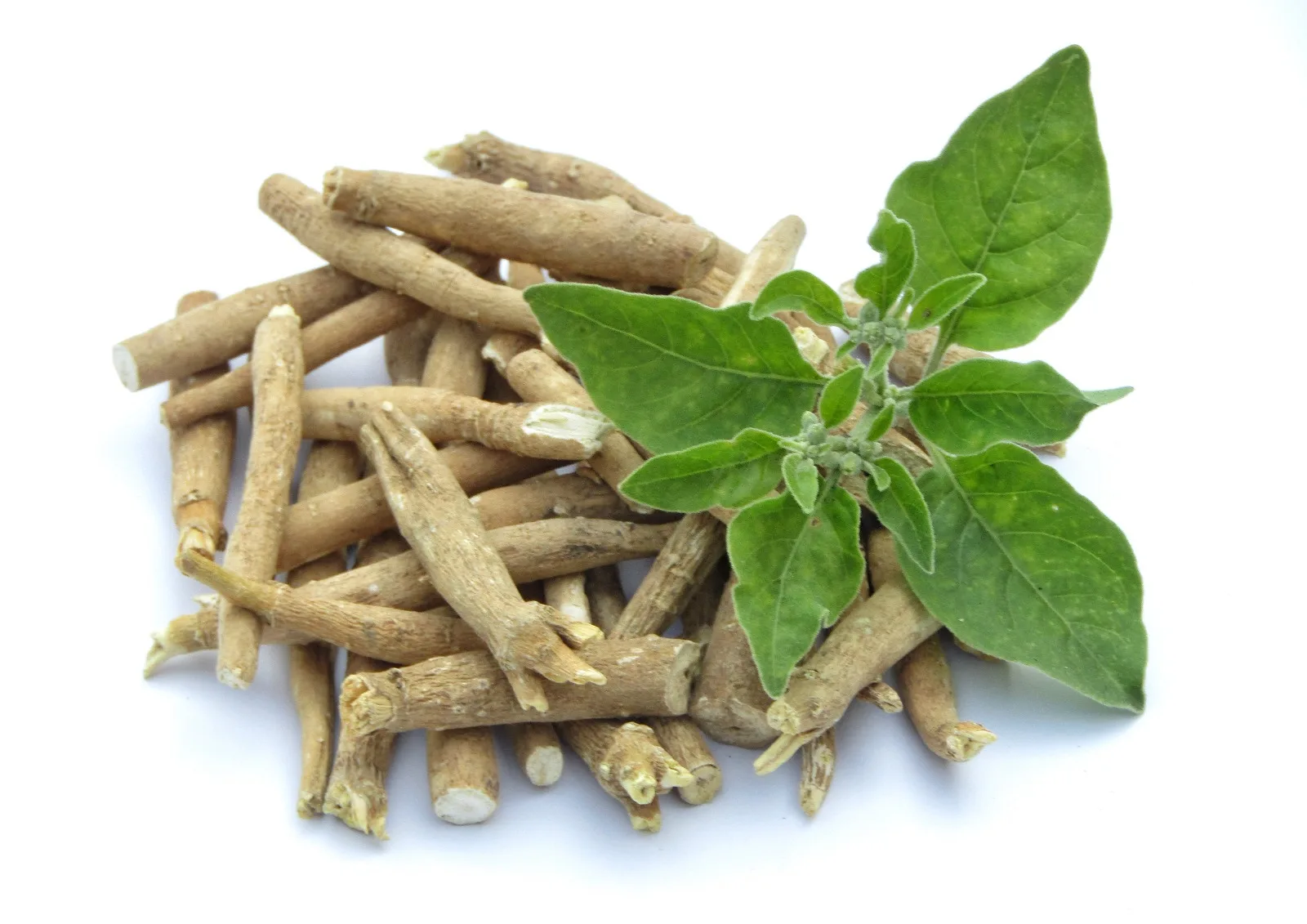
Go back a few centuries in Ayurvedic history. Practitioners almost always reached for the underground root of Withania somnifera—what we know as Ashwagandha.
Why? It came down to convenience. The roots were sturdy. They were easy to pull up from the dirt, scrub clean, dry under the sun, and crush into basic powders using crude stones. Simple, low-tech, and practical for the time.
Fast-forward to modern plant science.
With today’s lab tools, researchers aren’t limited to traditional habits. Advanced testing shows that the green leaves growing above ground carry a distinct set of active plant compounds. By extracting bioactives from both the root and the leaves, formulators can develop a broader whole-plant profile.
And understanding real ashwagandha root and leaf benefits isn’t just repeating tradition. It also requires looking beyond traditional assumptions. What actually matters now is batch standardization, scientific characterization, careful safety screening, and solid evidence-based evaluation.
Root vs. Leaf: Understanding the Whole-Plant Profile
Plants don’t exactly keep the same compounds in every tissue. Roots and leaves handle different biological duties, so their phytochemical composition naturally changes.
The Root Profile
Think of the root as the anchor and storage tank. It holds baseline withanolides and related compounds that traditional herbalists relied on to ease physical weariness and support daily stamina.
The Leaf Profile
Leaves serve as the plant’s engine. Exposed to direct sunlight and air, leaf tissue contains bioactive constituents that have been investigated for several biological activities. Preclinical research shows that leaf-derived constituents possess biological activities that complement those found in the root.
The Combined Extract Advantage
Bringing both plant parts together during extraction preserves the full array of native bioactives. Evaluating ashwagandha root and leaf benefits from a whole-plant perspective gives manufacturers a balanced, standardized profile—without having to deal with raw, unrefined powders that change from batch to batch.
Why Standardized Ashwagandha Root and Leaf Extracts Matter
The thing is with raw botanicals: weather, soil quality, and harvest timing can cause active compound levels to jump all over the place. Buy an unrefined powder today and it might be totally different from the next batch.
Standardization and scientific characterization fix that volatility.
Using analytical techniques such as High-Performance Liquid Chromatography (HPLC), scientists can characterize the constituent profile of an extract. This helps ensure that every production batch consistently meets its specified constituent profile. For brand owners and formulators, standardized whole-plant extracts provide that batch to batch consistency and also complete scientific transparency.
Potential Benefits Supported by Scientific Research
Standardized whole-plant extracts have been reviewed in peer-reviewed journals and also tested in human clinical trials. Rather than relying on marketing claims, the available scientific evidence points to a few practical areas of daily wellness rather than making exaggerated promises.
1. Supporting a steady stress response
Ashwagandha is often described as a natural adaptogen. Clinical studies suggest that standardized root and leaf extracts may help support a sound stress response. In other words, it can make it feel easier to manage daily tension and help keep emotional steadiness in its place.
2. Improving Restorative Sleep
Even the species name, somnifera, is basically linked to “sleep-inducing” in meaning. Current clinical research on standardized extracts backs that idea, and it suggests that root-and-leaf combinations may help improve sleep quality markers, so people tend to wake up feeling better without that morning fog .
3. Energy, Vitality, and Physical Endurance
This is not a coffee-like jolt, nor some rough stimulant. Rather, the research-based evaluation indicates that standardized extracts can support steady physical endurance, stamina, and general vitality over time.
4. Cognitive Support
Research keeps going into more standardized root-and-leaf extracts, and how they could, in a practical sense, support focus, memory, and general cognitive well-being even when day to day stress shows up.
Rethinking Safety: The Role of Scientific Standardization
You still hear, from time to time, debates inside the supplement world about whether the extract should stay strictly with the root, or whether leaves should be included as well. Some critics claim leaf tissue needs extra scrutiny, and maybe even extra caution. Yet toxicologists and botanical experts keep saying it’s not as clear-cut as that. Because if you only judge safety based on which plant part was harvested, that approach is honestly too simple.
When evaluating the safety of standardized Ashwagandha root and leaf extracts, the real substantiation leans on a few core quality pillars:
- Scientific Characterization: Running advanced testing like HPLC to map out the raw material’s exact active footprint.
- Batch Standardization: Making sure every production run meets fixed, verified active levels.
- Controlled extraction: isolating beneficial compounds while leaving the unwanted impurities behind.
- Comprehensive quality testing : screening every single batch for heavy metals pesticides residual solvents and microbes.
- Toxicological evidence: leaning on published safety data—like 90-day subchronic GLP toxicity studies—and also human clinical trials, to confirm safety .
Published safety studies and clinical evaluations provide supportive evidence for standardized root-and-leaf extracts under the conditions studied.
Evidence-Based Evaluation and Modern Dosing
The biggest headache with unrefined plants is unpredictability. Without proper characterization, consumers end up getting inconsistent amounts of active compounds.
Through controlled extraction and standardization, manufacturers enrich key active constituents to guaranteed levels. Standardization helps maintain consistent constituent levels across production batches while supporting product quality.
When the active levels are stable, daily supplementation becomes way easier for consumers, and at the same time gives formulators more room to maneuver when designing capsules, tablets, gummies, or functional beverages. Current research seems to suggest that blending root tissue with leaf tissue creates a more science-driven pathway , one that leans on standardization, characterization and safety evaluation.
FAQs
1. What is the main difference between an Ashwagandha root extract and a root-and-leaf extract?
An Ashwagandha root extract comes only from the underground part , while a root-and-leaf extract uses both the root plus the foliage. So the second one usually aims for a wider mix of bioactive compounds, not just the root’s own contribution.
2. Is Ashwagandha root and leaf extract better than root-only extract?
Neither is inherently “better”; combining standardized roots and leaves simply provides a wider variety of natural plant bioactives with verified batch safety and a broader phytochemical profile
3. Are Ashwagandha leaves safe for use in dietary supplements?
Yes, in general. Some standardized root-and-leaf extracts have been supported by published GLP toxicological evaluations and also by human clinical safety trials.
4. Why do standardization and scientific characterization matter so much?
Because they make sure each batch keeps a guaranteed concentration of the active constituents, which is really helpful for dependable safety. Also for quality control and, in a more practical sense, consistent performance too.
5.Why is evidence-based evaluation important for Ashwagandha extracts?
Because it makes sure the claims are tied to published scientific evidence and safety assessments rather than unverified marketing claims.
6. How do I verify the quality of an ashwagandha root and leaf benefits claim?
Check for ingredients supported by published safety studies, HPLC characterization, strict contaminant testing, and clear standardization metrics.