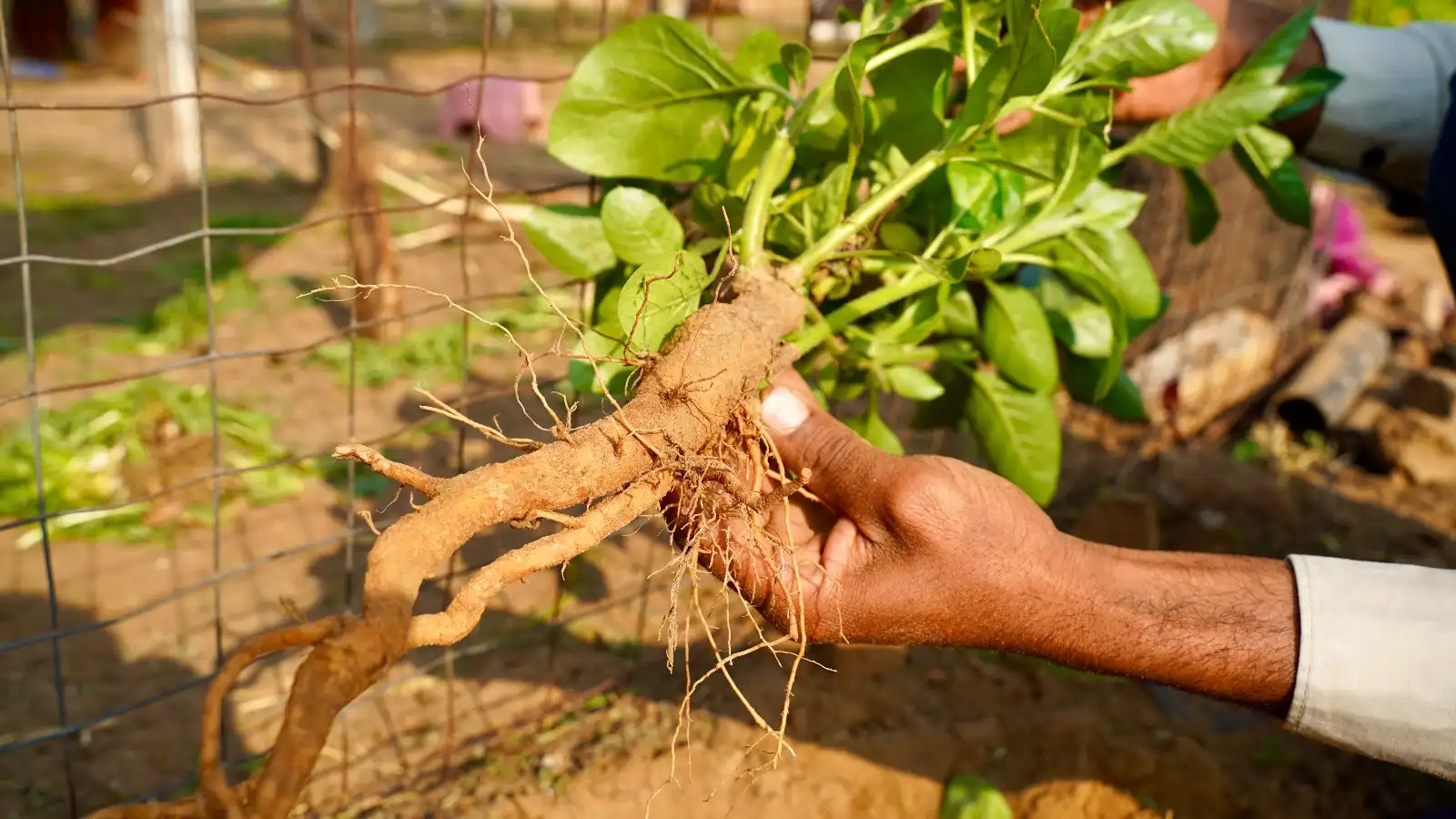
People still talk about traditional use, and that matters, but modern formulators don’t stop there. They lean on analytical evidence too, so when you ask what the ashwagandha root and leaf do, you have to look past stories and into how modern, science-based testing treats standardized extracts before an ingredient is ever put into a production line. It’s a small shift specially with Ashwagandha (Withania somnifera), which really highlights how the whole evaluation process changed over time.
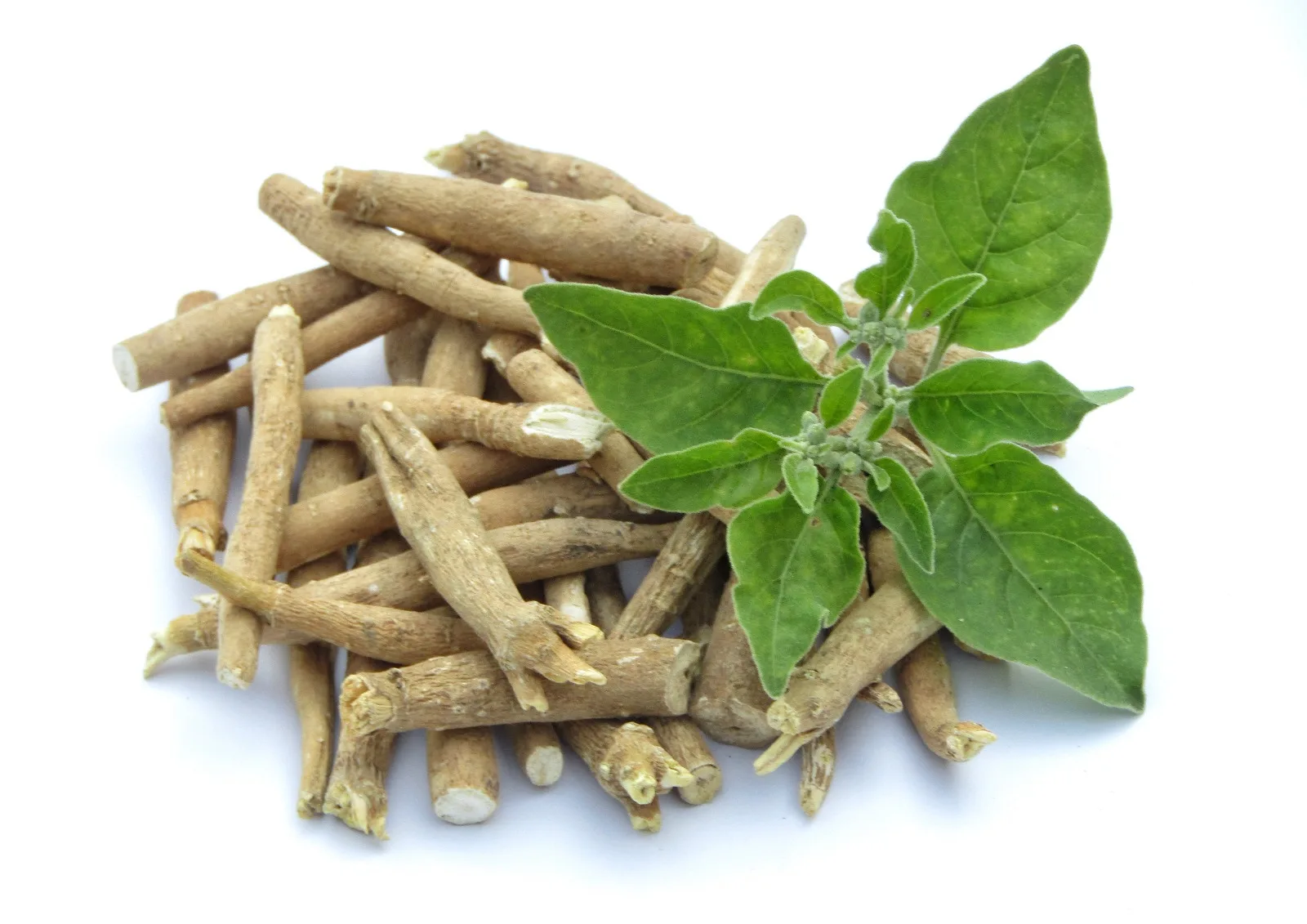
For years, the industry defaulted to using just the root—mainly because it was what people knew best. But plant chemistry tells a broader story: green leaves growing above ground carry a distinct set of active compounds that complement what’s underground. Extracting from both parts gives developers a much broader whole-plant profile to work with.
Of course, working with a combined root-and-leaf ingredient isn’t just about blending plant biomass. It brings up very real technical questions around batch standardization, testing methods, safety screening, and clinical evidence.
Root vs. Leaf: Why Chemistry Differs Across the Plant
Plants don’t really keep bioactives in a perfectly even way throughout all their tissues. And since roots and leaves are doing entirely different work inside the organism, their chemical profiles naturally differ.
- The Root: Serves as the underground base. Traditionally used to help ease physical weariness and support daily stamina, it builds baseline withanolide content over the growing season.
- The Leaf: Soaked in sunlight and air, leaf tissue acts as a metabolic engine. Leaf material carries bioactive constituents that have been looked into for multiple biological actions, alongside (not instead of) those same general kinds of actives found in the root.
- The Combination: Using both tissues helps preserve a wider native chemistry range. For brand owners, that means getting a balanced, standardized profile instead of dealing with unrefined raw powders that shift from crop to crop.
What the Science Says About Root and Leaf Applications
Published research on standardized Ashwagandha root-and-leaf extracts has explored areas such as stress response, sleep quality, physical vitality, and mental clarity. Rather than re-going over every benefit, it also helps to look at how standardization, scientific characterization, and final extract checks keep the findings steady, reliable. In other words, it’s not just what people hope the extract will do, but how the evidence is actually built.
The Reality of Batch Standardization
Raw biomass varies naturally. Weather shifts, soil conditions, and harvest timing cause active compound levels in Withania somnifera crops to swing from one season to the next.
Skipping strict standardization lets that inconsistency land straight in manufacturing:
- Active constituent levels shift unpredictably from lot to lot.
- Setting tight finished product specs becomes almost impossible.
- Formulators end up guessing dosing targets without a fixed active baseline.
Proper standardization fixes that volatility. By establishing tight target ranges for key marker compounds, processing teams ensure that every batch delivers a predictable, scientifically defined ingredient.
Going Beyond “Total Weight” Estimates
In the past, raw material testing relied on crude assays that only estimated total compound weight. Modern botanical science demands knowing exactly what compounds make up that number.
For the extracts from Ashwagandha root and leaf, the main bioactives mostly come from the withanolide family. In practice, High-Performance Liquid Chromatography, or HPLC, is often the usual analytical tool to split and estimate these constituents accurately.
What HPLC Characterization Delivers
- True Fingerprinting: HPLC separates and measures specific withanolides and withanolide glycosides rather than offering a vague total weight.
- Profile Verification: It verifies that the active constituent profile matches the specifications established during development.
- Material Authentication: Chromatographic fingerprinting confirms the extract comes strictly from authentic Withania somnifera biomass.
Through HPLC characterization, quality teams get full visibility into the exact chemical profile of their raw material.
Clinical Evidence and Specific Extract Profiles
For scientific teams, an ingredient is only as valid as the data behind it. But there’s an essential rule in botanical research: you cannot take clinical trial results from one extract and apply them to another extract with a different chemical fingerprint.
When reviewing Ashwagandha root and leaf extracts, clinical data must be evaluated in context:
- Data is Extract-Specific: Trial results belong strictly to the specific standardized profile and constituent ratio tested in that study.
- Repeatable Outcomes: Ensuring your commercial raw material matches the exact profile tested in published trials gives brand owners confidence that finished products will perform as expected.
Evaluating Safety in the Finished Extract
Safety testing is non-negotiable when working with botanical extracts, especially when aerial leaf tissue is combined with traditional roots.
Toxicologists and regulatory experts agree that safety cannot be judged on raw plant parts alone. The finished extract must be evaluated as a complete, unified entity.
Pillars of a Complete Safety Assessment
- Toxicological evaluation: Where we go through published toxicology records for instance 90-day subchronic GLP toxicity studies and also check the human clinical safety data for that specific extract.
- Contaminant screening: Includes running tests on the production lots for heavy metals, pesticide residues, elemental impurities, leftover solvents, and microbial pathogens .
- Batch quality verification: Making sure the manufacturing steps—again and again—end up producing an extract with reliable quality and safety requirements.
Relying on published toxicological evidence and rigorous quality testing gives formulators and regulatory teams clear, transparent verification.
Summary: Grounding Innovation in Solid Science
When developers combine root and leaf tissue, they get kind of a whole-plant perspective on Ashwagandha chemistry, but turning “ashwagandha root and leaf benefits” into real value is not a simple move. It needs rigorous testing, steady standardization, and actual scientific verification.
If formulators insist on batch standardization, HPLC-verified constituent profiling , extract-specific clinical evidence, and finished-product safety assessments, then Ashwagandha root and leaf products can become more reliable, more consistent, and also scientifically trustworthy.
FAQs
1. What is the main benefit of mixing Ashwagandha root and leaf extracts together?
It gives you a broader phytochemical range, because the underground root and the aerial leaf tissue carry related active substances. So you get complementary constituents without relying on just one part of the plant.
2.What is botanical standardization in Ashwagandha extracts?
Standardization is basically the process where you test and then fine tune an extract so it holds a stable, consistent amount of key marker compounds from batch to batch. The goal is a fixed concentration, not a “sometimes it’s stronger” situation.
3. Why is HPLC testing needed for Ashwagandha characterization?
High-Performance Liquid Chromatography, or HPLC, separates and measures individual active constituents. That creates a clear chemical profile or fingerprint that helps confirm quality and also authenticity, in a precise way.
4. Why do safety assessments need to evaluate the finished extract?
Because checking the final extract means you’ve verified that this exact blend and concentration of active constituents in the ingredient is safe. It’s not just theory based on raw plant material, it’s about the finished combination.
5.Can clinical research from one Ashwagandha extract apply to all extracts?
Not really, because clinical trial findings are tied to that particular standardized profile, the constituent ratio and overall characterization of the extract that was studied.