Let's Talk

Herbal Extract Manufacturer & Exporter in India | Arjuna Natural, Botanical

Generic selectors
Exact matches only
Search in title
Search in content
Post Type Selectors

Search & Explore

Generic selectors
Exact matches only
Search in title
Search in content
Post Type Selectors
Edit Template

General

Patented Ashwagandha root and leaf extract
General

Patented Ashwagandha root and leaf extract

A comprehensive clinical assessment published in Advances in Integrative Medicine confirms zero adverse effects at therapeutic doses. KOCHI, India – September 1, 2026 – Arjuna Natural Pvt. Ltd. announced today the publication of a comprehensive clinical safety assessment of Shoden®, its proprietary Ashwagandha extract standardized to 35% withanolide glycosides, in the peer-reviewed journal Advances in Integrative Medicine. The study, conducted across 62 healthy volunteers over 90 consecutive days, provides scientific validation that daily administration of 480 milligrams of Shoden® is safe and well-tolerated, with no clinically significant adverse effects observed. The research represents a significant milestone in evidence-based botanical supplementation, further establishing Shoden® as a safe, highly bioavailable, and clinically validated ashwagandha root and leaf extract. These human clinical findings address a critical gap in the supplement industry, where efficacy claims often outpace rigorous safety documentation. “This peer-reviewed safety study reflects Arjuna Natural’s unwavering commitment to rigorous botanical science,” said Dr. Iwin Joseph Benny, lead researcher and Clinician at Arjuna Natural. “Healthcare practitioners can now recommend Shoden® with absolute confidence that the ingredient is not only therapeutically active but exceptionally safe for sustained use.” The study employed rigorous clinical methodology, monitoring participants through four assessment points spanning the 90-day period. Comprehensive biochemical and hematological panels evaluated hepatic function, renal clearance, metabolic parameters, and systemic inflammatory markers. Throughout the trial, all monitored parameters remained within normal physiological ranges, with no statistically significant deviations from baseline values observed at any time point. Hepatic function markers—including serum alanine aminotransferase (ALT), aspartate aminotransferase (AST), alkaline phosphatase (ALP), and bilirubin—remained stable throughout the trial, demonstrating that Shoden® administration imposes no hepatic metabolic burden. This carries clinical significance for patients with compromised liver function or those using other therapeutics metabolized through hepatic pathways. Renal function assessment proved equally reassuring. Glomerular filtration rate measurements remained stable throughout the 90-day period, consistently tracking at or above age-specific physiological norms. Urine analysis revealed no qualitative abnormalities, indicating the absence of renal stress. Blood glucose levels, serum cholesterol concentrations, body weight, blood pressure, and heart rate all remained within normal ranges with no significant variability. Erythrocyte sedimentation rate, a sensitive marker of systemic inflammation, remained normal, indicating that 90 days of Shoden® administration did not elicit an inflammatory response. The complete absence of clinically significant adverse effects distinguishes Shoden® within the botanical supplement landscape, where herbal products frequently generate reports of gastrointestinal disturbances, headaches, or allergic reactivity. This safety validation builds upon Arjuna Natural’s expanding body of clinical evidence. The company has published 11 peer-reviewed clinical trials demonstrating Shoden®’s efficacy across stress resilience, sleep quality, cognitive performance, and hormonal balance domains. Shoden®’s 35% withanolide glycoside standardization represents the highest concentration achieved in any commercialized ashwagandha extract globally, substantially exceeding the 4 to 7 percent standardization typical of competitors. Clinical data demonstrates therapeutic efficacy at low doses—60 to 120 milligrams daily—compared to competitor products requiring 300 to 600 milligrams. Additionally, Shoden’s withanolide compounds remain bioavailable in systemic circulation for 24 hours following administration, enabling once-daily dosing regimens that substantially improve patient compliance. Furthermore, the ingredient maintains Health Canada Natural and Non-prescription Health Products Directorate approval for multiple health claims, including stress and sleep support. “From a manufacturer’s perspective, Shoden® represents a rare combination of competitive differentiation and regulatory defensibility,” noted Benny Antony, Co-Founder and Managing Director at Arjuna Natural. “The ingredient enables supplement and food brands to make substantiated health claims while simultaneously providing unprecedented liability protection and regulatory confidence.” Publication of this safety study in Advances in Integrative Medicine subjects Shoden® to the scientific scrutiny and editorial standards applied to all published research. The open-access publication model ensures that healthcare practitioners, researchers, and consumers can independently access and evaluate the complete study methodology, findings, and conclusions. This transparency contrasts sharply with competitors’ reliance on unpublished proprietary studies or marketing literature lacking external scientific review. “Publishing safety data creates accountability,” Dr. Benny explained. “If competitors wish to challenge these findings, they must do so through peer-reviewed literature rather than unsubstantiated marketing claims. This scientific rigor ultimately protects consumers and healthcare practitioners by establishing evidence-based standards for the adaptogenic supplement category.” “When botanical ingredients are properly extracted, appropriately standardized, and rigorously validated through clinical research, they deliver therapeutic benefits matched by exceptional safety profiles,” Antony concluded. “Shoden® exemplifies the proposition that efficacy and safety are not mutually exclusive.” The published article, “Safety and tolerability assessment of Shoden, the Ashwagandha extract standardised with withanolide glycosides: An open label study in healthy volunteers,” appears in Advances in Integrative Medicine, Volume 13, 2026. The open-access publication is available at www.sciencedirect.com/journal/advances-in-integrative-medicine, with digital object identifier https://doi.org/10.1016/j.aimed.2026.100688. About Arjuna Natural Arjuna Natural is an innovator in clinically validated botanical extracts serving the global nutraceutical, pharmaceutical, and functional food industries. The company combines 35 years of botanical science expertise with contemporary extraction methodologies and rigorous clinical validation. Arjuna Natural has published 150 peer-reviewed scientific articles, maintains 120 international patents, and operates state-of-the-art manufacturing facilities powered entirely by renewable energy.

Ashwagandha Root and Leaf Extract: Exploring the Benefits of Both Plant Parts
General

Ashwagandha Root and Leaf Extract: Exploring the Benefits of Both Plant Parts

People still talk about traditional use, and that matters, but modern formulators don’t stop there. They lean on analytical evidence too, so when you ask what the ashwagandha root and leaf do, you have to look past stories and into how modern, science-based testing treats standardized extracts before an ingredient is ever put into a production line. It’s a small shift specially with Ashwagandha (Withania somnifera), which really highlights how the whole evaluation process changed over time. For years, the industry defaulted to using just the root—mainly because it was what people knew best. But plant chemistry tells a broader story: green leaves growing above ground carry a distinct set of active compounds that complement what’s underground. Extracting from both parts gives developers a much broader whole-plant profile to work with. Of course, working with a combined root-and-leaf ingredient isn’t just about blending plant biomass. It brings up very real technical questions around batch standardization, testing methods, safety screening, and clinical evidence. Root vs. Leaf: Why Chemistry Differs Across the Plant Plants don’t really keep bioactives in a perfectly even way throughout all their tissues. And since roots and leaves are doing entirely different work inside the organism, their chemical profiles naturally differ.  What the Science Says About Root and Leaf Applications Published research on standardized Ashwagandha root-and-leaf extracts has explored areas such as stress response, sleep quality, physical vitality, and mental clarity. Rather than re-going over every benefit, it also helps to look at how standardization, scientific characterization, and final extract checks keep the findings steady, reliable. In other words, it’s not just what people hope the extract will do, but how the evidence is actually built.  The Reality of Batch Standardization Raw biomass varies naturally. Weather shifts, soil conditions, and harvest timing cause active compound levels in Withania somnifera crops to swing from one season to the next. Skipping strict standardization lets that inconsistency land straight in manufacturing: Proper standardization fixes that volatility. By establishing tight target ranges for key marker compounds, processing teams ensure that every batch delivers a predictable, scientifically defined ingredient. Going Beyond “Total Weight” Estimates In the past, raw material testing relied on crude assays that only estimated total compound weight. Modern botanical science demands knowing exactly what compounds make up that number. For the extracts from Ashwagandha root and leaf, the main bioactives mostly come from the withanolide family. In practice, High-Performance Liquid Chromatography, or HPLC, is often the usual analytical tool to split and estimate these constituents accurately. What HPLC Characterization Delivers Through HPLC characterization, quality teams get full visibility into the exact chemical profile of their raw material. Clinical Evidence and Specific Extract Profiles For scientific teams, an ingredient is only as valid as the data behind it. But there’s an essential rule in botanical research: you cannot take clinical trial results from one extract and apply them to another extract with a different chemical fingerprint. When reviewing Ashwagandha root and leaf extracts, clinical data must be evaluated in context: Evaluating Safety in the Finished Extract Safety testing is non-negotiable when working with botanical extracts, especially when aerial leaf tissue is combined with traditional roots. Toxicologists and regulatory experts agree that safety cannot be judged on raw plant parts alone. The finished extract must be evaluated as a complete, unified entity. Pillars of a Complete Safety Assessment Relying on published toxicological evidence and rigorous quality testing gives formulators and regulatory teams clear, transparent verification. Summary: Grounding Innovation in Solid Science When developers combine root and leaf tissue, they get kind of a whole-plant perspective on Ashwagandha chemistry, but turning “ashwagandha root and leaf benefits” into real value is not a simple move. It needs rigorous testing, steady standardization, and actual scientific verification.   If formulators insist on batch standardization, HPLC-verified constituent profiling , extract-specific clinical evidence, and finished-product safety assessments, then Ashwagandha root and leaf products can become more reliable, more consistent, and also scientifically trustworthy. FAQs 1. What is the main benefit of mixing Ashwagandha root and leaf extracts together? It gives you a broader phytochemical range, because the underground root and the aerial leaf tissue carry related active substances. So you get complementary constituents without relying on just one part of the plant. 2.What is botanical standardization in Ashwagandha extracts? Standardization is basically the process where you test and then fine tune an extract so it holds a stable, consistent amount of key marker compounds from batch to batch. The goal is a fixed concentration, not a “sometimes it’s stronger” situation. 3. Why is HPLC testing needed for Ashwagandha characterization? High-Performance Liquid Chromatography, or HPLC, separates and measures individual active constituents. That creates a clear chemical profile or fingerprint that helps confirm quality and also authenticity, in a precise way. 4. Why do safety assessments need to evaluate the finished extract? Because checking the final extract means you’ve verified that this exact blend and concentration of active constituents in the ingredient is safe. It’s not just theory based on raw plant material, it’s about the finished combination. 5.Can clinical research from one Ashwagandha extract apply to all extracts? Not really, because clinical trial findings are tied to that particular standardized profile, the constituent ratio and overall characterization of the extract that was studied.

What are the Unique Benefits of Ashwagandha Root and Leaf Extract
General

What are the Unique Benefits of Ashwagandha Root and Leaf Extract

Go back a few centuries in Ayurvedic history. Practitioners almost always reached for the underground root of Withania somnifera—what we know as Ashwagandha. Why? It came down to convenience. The roots were sturdy. They were easy to pull up from the dirt, scrub clean, dry under the sun, and crush into basic powders using crude stones. Simple, low-tech, and practical for the time. Fast-forward to modern plant science. With today’s lab tools, researchers aren’t limited to traditional habits. Advanced testing shows that the green leaves growing above ground carry a distinct set of active plant compounds. By extracting bioactives from both the root and the leaves, formulators can develop a broader whole-plant profile.  And understanding real ashwagandha root and leaf benefits isn’t just repeating tradition. It also requires looking beyond traditional assumptions. What actually matters now is batch standardization, scientific characterization, careful safety screening, and solid evidence-based evaluation. Root vs. Leaf: Understanding the Whole-Plant Profile Plants don’t exactly keep the same compounds in every tissue. Roots and leaves handle different biological duties, so their phytochemical composition naturally changes. The Root Profile Think of the root as the anchor and storage tank. It holds baseline withanolides and related compounds that traditional herbalists relied on to ease physical weariness and support daily stamina. The Leaf Profile Leaves serve as the plant’s engine. Exposed to direct sunlight and air, leaf tissue contains bioactive constituents that have been investigated for several biological activities. Preclinical research shows that leaf-derived constituents possess biological activities that complement those found in the root. The Combined Extract Advantage Bringing both plant parts together during extraction preserves the full array of native bioactives. Evaluating ashwagandha root and leaf benefits from a whole-plant perspective gives manufacturers a balanced, standardized profile—without having to deal with raw, unrefined powders that change from batch to batch. Why Standardized Ashwagandha Root and Leaf Extracts Matter The thing is with raw botanicals: weather, soil quality, and harvest timing can cause active compound levels to jump all over the place. Buy an unrefined powder today and it might be totally different from the next batch.  Standardization and scientific characterization fix that volatility. Using analytical techniques such as High-Performance Liquid Chromatography (HPLC), scientists can characterize the constituent profile of an extract. This helps ensure that every production batch consistently meets its specified constituent profile. For brand owners and formulators, standardized whole-plant extracts provide that batch to batch consistency and also complete scientific transparency. Potential Benefits Supported by Scientific Research Standardized whole-plant extracts have been reviewed in peer-reviewed journals and also tested in human clinical trials. Rather than relying on marketing claims, the available scientific evidence points to a few practical areas of daily wellness rather than making exaggerated promises.  1. Supporting a steady stress response   Ashwagandha is often described as a natural adaptogen. Clinical studies suggest that standardized root and leaf extracts may help support a sound stress response. In other words, it can make it feel easier to manage daily tension and help keep emotional steadiness in its place. 2. Improving Restorative Sleep   Even the species name, somnifera, is basically linked to “sleep-inducing” in meaning. Current clinical research on standardized extracts backs that idea, and it suggests that root-and-leaf combinations may help improve sleep quality markers, so people tend to wake up feeling better without that morning fog . 3. Energy, Vitality, and Physical Endurance   This is not a coffee-like jolt, nor some rough stimulant. Rather, the research-based evaluation indicates that standardized extracts can support steady physical endurance, stamina, and general vitality over time. 4. Cognitive Support Research keeps going into more standardized root-and-leaf extracts, and how they could, in a practical sense, support focus, memory, and general cognitive well-being even when day to day stress shows up.  Rethinking Safety: The Role of Scientific Standardization You still hear, from time to time, debates inside the supplement world about whether the extract should stay strictly with the root, or whether leaves should be included as well. Some critics claim leaf tissue needs extra scrutiny, and maybe even extra caution. Yet toxicologists and botanical experts keep saying it’s not as clear-cut as that. Because if you only judge safety based on which plant part was harvested, that approach is honestly too simple. When evaluating the safety of standardized Ashwagandha root and leaf extracts, the real substantiation leans on a few core quality pillars:  Published safety studies and clinical evaluations provide supportive evidence for standardized root-and-leaf extracts under the conditions studied.  Evidence-Based Evaluation and Modern Dosing The biggest headache with unrefined plants is unpredictability. Without proper characterization, consumers end up getting inconsistent amounts of active compounds. Through controlled extraction and standardization, manufacturers enrich key active constituents to guaranteed levels. Standardization helps maintain consistent constituent levels across production batches while supporting product quality.  When the active levels are stable, daily supplementation becomes way easier for consumers, and at the same time gives formulators more room to maneuver when designing capsules, tablets, gummies, or functional beverages. Current research seems to suggest that blending root tissue with leaf tissue creates a more science-driven pathway , one that leans on standardization, characterization and safety evaluation.  FAQs 1. What is the main difference between an Ashwagandha root extract and a root-and-leaf extract? An Ashwagandha root extract comes only from the underground part , while a root-and-leaf extract uses both the root plus the foliage. So the second one usually aims for a wider mix of bioactive compounds, not just the root’s own contribution. 2. Is Ashwagandha root and leaf extract better than root-only extract? Neither is inherently “better”; combining standardized roots and leaves simply provides a wider variety of natural plant bioactives with verified batch safety and a broader phytochemical profile 3. Are Ashwagandha leaves safe for use in dietary supplements?  Yes, in general. Some standardized root-and-leaf extracts have been supported by published GLP toxicological evaluations and also by human clinical safety trials.  4. Why do standardization and scientific characterization matter so much?  Because they make sure each batch keeps a guaranteed concentration of

Can Nutraceutical Ingredient Manufacturers Customize Botanical Extracts for Your Brand?
General

Can Nutraceutical Ingredient Manufacturers Customize Botanical Extracts for Your Brand?

An idea for a product can go back and forth a few times before it ever lands in the market. The intended audience might shift along the way. The formulation can be tightened up a bit. Fresh research may influence the ingredient decisions. And through that whole process, there is usually one thing that stays the same: brands want ingredients that match their own product targets, not the reverse. That sounds simple enough. Yet many formulation teams eventually find themselves facing the same challenge. The botanical extract they need is almost right, but not completely. The active level is different from what they had planned. The specification is too broad. Or perhaps the ingredient looks nearly identical to what competing brands are already using. Nothing is necessarily wrong with the extract. It simply doesn’t fit the project as neatly as expected. That is often the point where discussions around custom nutraceutical ingredients begin. Instead of using a standard specification, brands are starting to ask whether the ingredient can be adapted. In many cases, the answer is yes. Still, it depends a lot on the manufacturer’s own technology, the strength of their research capabilities, and how flexible production really is in day to day work.  What Does “Customized Nutraceutical Ingredients” Actually Mean? The word customized tends to mean different things to different people. For some, it suggests a completely new ingredient. In reality, most customization projects are much more practical than that, because it’s rarely about inventing something from nothing.  Usually manufacturers work with an already existing botanical extract and then they adjust it—tuning the profile to better match a brand’s needs. So it’s not so much a brand new ingredient as it is a refined, adapted version of what was there before.  Those adjustments may include: Think of it as refining rather than reinventing. Two companies might be into the same botanical but for different sorts of reasons. One may want a higher concentration of a particular marker compound and another one may prefer a wider botanical profile.  This kind of flexibility is part of why demand for custom nutraceutical ingredients keeps climbing. Why Brands Need Customization in Botanical Extracts Most brands aren’t trying to launch products that look exactly like everyone else.   Instead, a bunch of formulation teams spend quite some time figuring out ways to craft a sharper edge of difference, even if it sounds minor at first.  This is where customized botanical extracts start to matter.  Product Differentiation In some categories, products can begin to feel remarkably similar. The ingredient list looks familiar. The specifications are almost identical. Even the product positioning overlaps. A customized extract may not completely transform a category, but it can help support a more distinctive formulation strategy.. Targeted Formulations Every formulation gets made with a particular objective in mind. So, if there’s an extract profile that works really well for one application , it might not be the best fit for another. Even small tweaks in ingredient characteristics can, in some cases, affect how the formulation ends up being developed. With customization , brands can explore ingredient profiles that match more closely the outcomes they’re aiming for, rather than settling for something generic.  Market-Specific Requirements A product that is made for one region doesn’t always roll over perfectly into another. Regulations can change, consumer expectations also shift, and market trends rarely stay the same. In situations like this, custom botanical extracts can offer that small bit of additional flexibility, but brands still want to keep a consistent “feel” across their entire lineup too. Types of Customization Offered by Manufacturers Not every customization project is complex. Sometimes just a few relatively small adjustments can create a notable difference  Standardization Adjustments One of the most common requests involves changing the concentration of specific bioactive compounds. A formulation team may require higher or lower levels depending on product objectives, making standardization adjustments a practical starting point.. Blended Extracts Some manufacturers can combine multiple botanical ingredients into a single solution. Blended extracts may simplify formulation work and help create products that feel less generic. Format Variations Customization is not always about changing the ingredient composition itself. Manufacturers may also provide: These modifications can support manufacturing efficiency while improving ingredient handling. Key Factors That Enable Customization The ability to develop tailor-made herbal extracts depends on more than willingness. Several capabilities need to work together. Advanced Extraction Technology Not every customization request is technically possible. The extraction process often determines how much flexibility exists when adjusting ingredient specifications. Manufacturers with advanced extraction technology generally have greater control over ingredient composition and standardization. Strong R&D Capabilities Before any custom ingredient reaches production, there is usually a significant amount of evaluation taking place behind the scenes. Research teams assess feasibility, review technical requirements, and determine whether proposed specifications can be achieved consistently. This is often where strong manufacturers separate themselves from standard suppliers. Flexible Manufacturing Processes A custom specification is only useful if it can be produced in a repeatable way. Manufacturers really need manufacturing systems that can keep things steady , while still handling specialized requirements. This mix of technical know-how and manufacturing flexibility, often decides whether genuinely tailor-made herbal extracts can be developed consistently at scale. Limitations of Customization Customization creates opportunities, but it also comes with practical limitations. Understanding those limitations early helps avoid unrealistic expectations later. Regulatory Restrictions Customized ingredients must still comply with relevant regulatory and safety requirements. Some requests may not be feasible because of compliance considerations. Raw Material Constraints Botanical extracts start with agricultural raw materials. Seasonal changes , geography, and the real quality of the crop all can shift what kind of flexibility you can actually count on.  Minimum Order Quantities Custom projects often require additional development work, validation, and production planning. So manufacturers often set minimum order requirements before they move ahead, even if you ask for something more specific.   How to judge a manufacturer’s capacity for customization   Not every supplier treats personalization in the same manner;, some are careful

Choosing the Right Nutraceutical Ingredient Manufacturer: 7 Factors Brands Can’t Afford to Ignore
General

Choosing the Right Nutraceutical Ingredient Manufacturer: 7 Factors Brands Can’t Afford to Ignore

A supplier usually looks good at the beginning. The specification sheet checks out. The certifications seem fine. Samples arrive on time. On the surface, everything appears to be moving in the right direction. The real test comes later. It begins when production volumes increase, when documentation gets requested by a customer, or when the same ingredient has to perform exactly as it did six months earlier. And that’s usually where differences between manufacturers become much easier to see. For nutraceutical brands, choosing an ingredient manufacturer isn’t just a routine sourcing activity anymore. It turns into a decision with consequences for product quality, regulatory readiness, supply continuity, and even overall brand reputation.So more companies are paying closer attention to how to pick nutraceutical manufacturer partners that can actually support long-term growth, not only cover short-term purchasing needs.   A careful nutraceutical ingredient manufacturer selection process helps cut risk, while also building a sturdier base for innovation, quality, and market credibility.  Why the Right Manufacturer Matters More Than Ever A few years back, supplier evaluations often leaned heavily on pricing and availability ,that was basically the whole story. Now though the conversation is broader, more nuanced and a bit messier. Brands are expected to back up their claims with evidence, keep quality steady and consistent and also give more transparency across the whole supply chain. At the same time, global sourcing networks have become more tangled. If there’s a disruption at one stage, it can ripple into production schedules, throw off inventory planning,and delay product launches. So, because of that, manufacturers are increasingly seen less as vendors and more as strategic partners. The best relationships seem to grow from reliability, scientific know how, and a mutual dedication to quality.  1. Standardization and consistency of extracts   Most formulation teams do not really think about consistency after reviewing the first sample. The worry usually shows up later, when every future batch is expected to behave the same way, like no surprises.   That is where standardized herbal extracts start to matter a lot.   Standardization helps keep defined levels of key bioactive compounds, so ingredient consistency stays steady from batch to batch. For brands, this translates into fewer odd moments during production and more confidence in how the final product will perform.   It is also smart to look past the numbers that sit on a specification sheet. Dependable manufacturers usually have systems in place to watch, verify, and keep the same quality steady, all the way through the production process. When you’re assessing suppliers, it matters just as much to see how that uniformity is actually reached as it does to look at what the specification claims. 2. Clinical validation and scientific backing   Not every ingredient has the same kind of deep evidence behind it, and it gets tricky fast.   Some ingredients are basically backed by years of scientific research, while others feel more like traditional use, or they’re carried by promotional material.   This gap shows up pretty quickly when brands have to prove credibility, reinforce product placement, or just answer technical questions from partners and stakeholders.   Manufacturers that actually invest in clinical studies, published research, and detailed scientific documentation usually end up offering extra value, beyond the ingredient itself.   And the fact that demand for clinically proven nutraceutical ingredients keeps rising suggests the whole industry is moving toward evidence driven choices.   Now, scientific backing doesn’t guarantee success but it often adds a layer of confidence to the whole ingredient selection process. 3. Extraction Technology and Manufacturing Capabilities   The source material matters, but also what happens after it arrives at the manufacturing facility, like really after. Extraction methods can influence purity, potency, stability, and even the overall composition of an ingredient. And different botanical extraction methods may end up giving noticeably different results, even when the raw materials look similar at the start.   This is why manufacturing capabilities deserve careful evaluation, not just a quick look.   Some questions that are worth asking include:   How are active compounds preserved ?   What quality controls are used during production? Can the manufacturer support future growth? Are testing procedures clearly documented, in a way that someone can actually follow? The answers usually provide useful insight into how a supplier handles quality and consistency, in practice not just in marketing.   4. Certifications and regulatory compliance   Most supplier evaluations include a review of certifications. Standards like GMP and ISO help show that a manufacturer uses recognized quality systems and operational routines.   But certifications are only one part of the picture . The quality of documentation, regulatory experience, and market specific compliance capabilities matter just as much.Brands that want to expand internationally should put extra emphasis on these areas. Working with GMP certified ingredient suppliers can lower friction during regulatory steps, and also help enable a cleaner, more seamless entry across different regions, overall.  Strong compliance systems dont always get much applause, especially when everything seems to run smoothly ,then it kind of disappears in the background. Their worth shows up a lot more when trouble arrives, or when the situation gets complicated, more than anyone expects. 5. Traceability and Sourcing Transparency   Questions about where things come from usually pop up sooner or later. Like, where was the botanical grown? How was it handled before processing actually started? And if it becomes necessary, can the origin of the material be checked or verified?   Manufacturers who can answer those details clearly, and with confidence are often easier to partner with over the long run.   When botanical ingredients are traceable, there is better visibility across the whole supply chain, while brands can also strengthen quality assurance more effectively.   Transparency these days is pretty tied in with sustainability too. Since interest keeps climbing around sustainable sourcing of nutraceuticals, companies want greater clarity about the raw material origins, plus the methods behind sourcing too.   So basically, the more information a manufacturer shares, the simpler it is to build trust.  6. Intellectual Property and Patented Ingredients   In fast moving, competitive markets, differentiation becomes a big deal.   Patented

Top Garlic Extract Manufacturers: What Sets the Best Apart
General, Products

Top Garlic Extract Manufacturers: What Sets the Best Apart

Why Not All Garlic Extract Systems Deliver the Same Results You Only Notice the Difference When Things Stop Matching Garlic extract (derived from Allium sativum) is rich in bioactive sulfur-containing compounds, particularly allicin, as well as other constituents such as ajoene and S-allyl cysteine. It also provides essential nutrients, including vitamins C and B6. These compounds are known for their health-supporting properties, especially in maintaining overall health, supporting antiseptic, antiasmathetic, and also act as a vasodilator  At the start, most ingredients feel similar. They meet specifications.They pass initial checks.They seem interchangeable. But over time, small differences begin to show up. A formulation behaves slightly differently.A batch doesn’t integrate the same way.Something that once felt stable starts needing adjustments. That’s usually when the question changes. Not “which ingredient are we using?”But “who is manufacturing it — and how?” Because when it comes to botanical systems, especially garlic-based extracts, the manufacturer often defines the outcome more than the ingredient name itself. Working with reliable Garlic Extract Manufacturers is less about sourcing and more about ensuring that the extract performs the same way, every time it’s used. Garlic Extract Isn’t a Simple Input Garlic extract comes from Allium sativum, but its composition is far from fixed. Its properties depend heavily on: The antimicrobial properties and immunomodulatory effects of garlic extracts make them valuable, while their metabolic and cardiovascular support functions enable their use in different applications. That functional profile makes consistency even more important. Because if the composition shifts, performance shifts with it. The Difference Often Starts Before Extraction Top Garlic Extract Manufacturers don’t begin with extraction. They begin with raw material control. Garlic quality can vary based on: If this stage is inconsistent, it becomes difficult to maintain uniformity later. That’s why structured manufacturers focus on: This early-stage discipline reduces variability before it reaches extraction. Extraction Is Where Consistency Is Either Built — or Lost Garlic contains sensitive compounds that can degrade or transform depending on how they are handled. That makes extraction a critical step. A dependable Garlic Extract Manufacturer uses controlled processes to: At companies like Arjuna Natural, extraction is carried out through in-house systems designed to maintain potency while ensuring consistency across production cycles This kind of control allows the extract to behave predictably — not just in one batch, but across repeated production. Standardisation Is What Makes It Usable A garlic extract might test well once. But production environments require repeatability. That’s where standardisation becomes important. Top Garlic Extract Manufacturers ensure that: Without standardisation, even small variations can affect blending, stability, or performance. With it, the ingredient becomes reliable. Application Matters More Than It Seems Garlic extract doesn’t exist in isolation. It becomes part of a larger system — whether in feed formulations, nutraceutical blends, or functional products. That means it needs to integrate smoothly. A practical Garlic Extract Manufacturer considers: When these factors are addressed early, formulation becomes more efficient. When they are not, issues tend to appear later. Manufacturing Systems Define Long-Term Performance Consistency is easy to achieve once. Maintaining it over time is where systems matter. Top Garlic Extract Manufacturers operate with: Companies like Arjuna Natural supply botanical extracts globally, maintaining consistent output across different markets and production volumes This kind of infrastructure supports scalability without compromising quality. Documentation Is More Than a Formality In B2B supply chains, documentation is part of the product. A structured Garlic Extract Manufacturer provides: This information helps formulation teams and regulatory teams work with confidence. Without it, even a good ingredient becomes difficult to manage. Stability Determines Whether Products Last Garlic extract needs to remain stable not just during production, but throughout its lifecycle. A dependable Garlic Extract Manufacturer focuses on: This stability reduces the need for reformulation and supports long-term product planning. What Actually Sets the Best Apart From the outside, many suppliers may appear similar. But the difference becomes clear over time. Top Garlic Extract Manufacturers provide more than an ingredient. They bring together a system that keeps everything working consistently  Companies like Arjuna Natural bring these elements together through structured processes that connect sourcing, extraction, and quality control into one continuous system. In the End, It’s About Repeatability The best manufacturers are not defined by a single strong batch. They are defined by consistency. Because in real-world production, performance is not judged once. It is judged every time the ingredient is used. That’s what separates average suppliers from top Garlic Extract Manufacturers. FAQs 1. What do Garlic Extract Manufacturers provide? They supply standardized garlic extracts designed for consistent performance across multiple production cycles. 2. Why is standardisation important in garlic extract? It ensures active compounds remain within defined limits, supporting predictable results. 3. What makes garlic extract variable? Factors like cultivation, harvesting, and processing can influence its composition. 4. Why is extraction control important? It helps preserve active compounds and maintain consistency across batches. 5. Is the garlic extract applicative across multiple ailments?  Yes, it plays a role in nutraceuticals, functional foods, and animal nutrition.  6. Which function does documentation play? The documentation process enables organizations to trace their work while ensuring product quality and meeting their regulatory obligations.  7. How do manufacturers ensure consistency? Through controlled sourcing, standardisation, and continuous quality monitoring. 8. Why is stability important in garlic extract? It ensures the extract performs reliably over time without degradation. 9. What differentiates top manufacturers? Structured systems, consistent processes, and reliable output across batches. 10. How does Arjuna Natural support garlic extract manufacturing? Through in-house extraction systems, standardized processes, and global supply capabilities.

CSR Initiative: A New Home for a Child
General, Latest News

CSR Initiative: A New Home for a Child

A Home, A Hope: Arjuna Natural Supports a Life-Changing CSR Initiative in Kakkanad At Arjuna Natural, sustainability goes beyond manufacturing—it extends into meaningful community impact. In line with this commitment, a heartfelt CSR initiative led by our Joint Managing Director, Dr. Benny Antony, along with the support of Dr. Merina Benny, has helped transform the life of a young child and her family. In collaboration with the Rotary Club of Cochin Global and Rotary Community Corps Thrikkakara, Arjuna Natural supported the “A Little Home for Thamburu Mol” project. The initiative culminated in a key handover ceremony held on March 16, 2026, in Kakkanad, marking the beginning of a new chapter for Thamburu and her family. This initiative was made possible through the collective efforts of dedicated individuals and the generous financial support extended by Dr. Benny Antony. Special appreciation is also extended to the Rotary leadership, including the President, Secretary, and Treasurer, for their approval and commitment in bringing this project to life. Despite her demanding schedule, Dr. Merina Benny made it a priority to be present for this meaningful occasion, reflecting the deep personal commitment behind this initiative. The project has provided Thamburu, a young child battling a congenital heart condition, and her family with a safe, clean, and stable home environment—something that is critical for her ongoing treatment and recovery. Previously, frequent travel to Kottayam Medical College for treatment posed significant challenges for the family, both physically and emotionally. During the interaction, Thamburu’s mother shared a heartfelt request—to explore the possibility of shifting her child’s treatment closer to Ernakulam, where access and travel would be more manageable. This highlights the continuing need for collective support, not just in infrastructure but also in enabling access to better healthcare. At Arjuna Natural, we believe true impact lies in addressing real human needs. This initiative is a reflection of our broader philosophy—where business success is closely aligned with social responsibility and compassion. As we move forward, we remain committed to supporting such meaningful initiatives that create lasting change, reinforcing our role not just as an industry leader, but as a responsible member of the community.

Advanced Delivery Systems: Improving Ingredient Performance
General, Industry

Advanced Delivery Systems: Improving Ingredient Performance

In formulation work, potency is often assumed to be the deciding factor. If an ingredient carries strong numbers, the expectation is that it will perform accordingly. In practice, this assumption breaks down quickly. Many extracts show promise on paper but struggle once they move into finished formats. The difference is rarely the ingredient itself. It is how that ingredient is delivered. This is where Advanced Delivery Systems have changed the conversation. Everyone sees them now as must-haves rather than add-ons or optional upgrades. They determine the choice of the ingredients, the building of the formulations, and the reliability of the reproduction of the products over time.  Curcumin is a case that illustrates it very well. It is well studied and widely accepted, yet its natural behaviour presents challenges that cannot be solved by concentration alone. Without delivery optimisation, much of its value is lost before it ever reaches its intended function. Absorption Has Become the Practical Measure of Efficacy Increasing the dose was once the default response to poor absorption. Over time, that approach created its own problems. Larger capsules, higher costs, formulation instability, and processing limitations all followed. Modern delivery approaches address the issue differently by improving uptake instead of compensating for inefficiency. Clinically validated bioavailability matters here because it reflects measured performance, not theoretical strength. Enhanced curcumin formats are developed so that more of the active compound becomes available without increasing the amount used. This makes formulation more manageable and reduces unnecessary complexity. When absorption is addressed early, many downstream issues disappear. Dosing remains reasonable. Formats stay flexible. Finished products behave consistently across batches. Delivery Is Designed Into the Ingredient These delivery technologies are not applied after extraction. They are built into the ingredient itself. This includes how curcumin is processed, how it disperses, and how it remains stable through handling and storage. Water-dispersible systems allow curcumin to function in beverages, powders, and liquid shots without separation or settling. Oil-based formats serve softgel applications where controlled release and absorption are priorities. These approaches address different application needs, but the underlying principle is the same: predictable behaviour regardless of format. Ingredients developed this way reduce the need for reformulation when delivery formats change. That flexibility becomes increasingly valuable as product portfolios expand. Enhanced Curcumin as a Reference Point Curcumin is often used as a reference when discussing delivery science because its limitations are well understood. Poor solubility and rapid metabolism historically restricted its effectiveness. Enhanced curcumin systems exist to address those issues directly. Delivery-optimised curcumin remains stable in finished products and exceeds the absorption of traditional extracts. This opens up wider applications for it without the need for constantly adjusting the dosage. Raw material suppliers like Arjuna Natural prioritise the alignment of extraction, dispersion, and stabilisation as a single process. This approach underpins consistency across production runs and supports long-term formulation planning. Stability Is an Indispensable Condition High absorption has been appreciated throughout the ages, however, it is not the only factor that ensures the success of a product. Active substances have to go through the processes of manufacturing, distribution, and storage without any loss of power or change in their behavior. Delivery-optimised formats are designed to protect actives throughout these stages. Enhanced curcumin formats are engineered to remain stable under typical manufacturing conditions. This reduces unexpected behaviour during scale-up and limits the need for repeated testing. For many teams, operational reliability matters more than headline claims. Stable systems support realistic timelines and reduce internal friction as products move from development into production. Expanding Use Beyond Capsules Modern delivery technologies have enabled curcumin to move beyond traditional capsules. Water-dispersible formats support functional beverages, sachets, and liquid shots where ease of use and flexibility are important. Oil-based systems continue to support softgels where absorption control is required. This adaptability allows formulation teams to explore new formats without abandoning core ingredients. Delivery science becomes a facilitator rather than a constraint. Delivery Science as a Strategic Consideration As ingredient categories mature, novelty alone becomes less effective as a differentiator. Consistency, scalability, and processing compatibility start to matter more. These delivery approaches allow ingredients to maintain identity while adapting to new applications. Clinical research has provided support to reliable systems that mitigate uncertainty and allow brands to strategize beyond one launch at a time. This skill gradually transforms into a long-term strategy rather than a temporary fix. Where Concepts Often Fail Many formulation ideas struggle not because the concept lacks merit, but because the ingredient system cannot adjust fast enough. When delivery remains rigid, even small changes require significant rework. Flexible delivery platforms make adjustment possible without destabilising the formulation base. Ingredients selected with future change in mind allow development to continue without constant rebuilding. Teams that treat ingredient systems as frameworks rather than fixed recipes tend to move faster and with fewer interruptions. Looking Forward Delivery science continues to reshape how ingredients are developed and applied. Enhanced curcumin demonstrates how optimised systems unlock consistent performance from well-known compounds. As formulation requirements evolve, delivery will remain central to turning ingredient potential into reliable outcomes that hold up over time. FAQs They improve the absorption, stability, and consistency of functional ingredients.

EcoVadis Bronze Certification 2025
General, Industry

EcoVadis Bronze Certification 2025

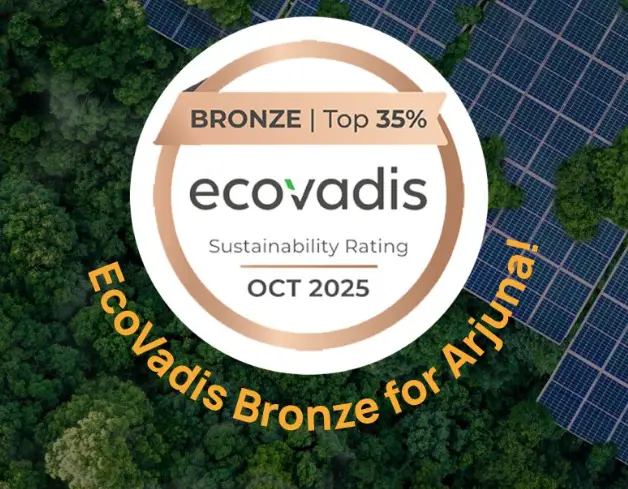
Arjuna Natural Earns EcoVadis Bronze Certification for Its Commitment to Sustainability At Arjuna Natural, sustainability is more than a corporate initiative — it is an integral part of who we are and how we operate. From responsibly sourcing botanicals to using renewable energy in production, every step we take reflects our dedication to a healthier planet and community. Arjuna Natural has received the EcoVadis Bronze certification, placing us in the 84th percentile globally among companies evaluated for their environmental, social, and ethical performance. This recognition reaffirms our commitment to advancing sustainable practices across our value chain — from farms to finished formulations. The EcoVadis rating assesses organizations on key criteria such as environmental impact, labor and human rights, ethics, and sustainable procurement. Our certification is a reflection of the robust systems we have in place, including our ISO 14001 (Environmental Management) and ISO 22000 (Food Safety Management) certifications that ensure accountability and transparency at every stage. Over the years, we have integrated eco-friendly initiatives into our operations — from solar-powered facilities and water conservation systems to responsible sourcing partnerships that support local farming communities. Each initiative reinforces our belief that progress and sustainability must move hand in hand. For us, sustainability isn’t a milestone; it’s a continuous journey — one that guides every innovation, decision, and action we take. As we celebrate this achievement, we remain committed to creating a greener, responsible, and thriving future, where natural wellness and environmental stewardship coexist in harmony. At Arjuna Natural, the journey toward sustainability continues — stronger than ever.

All Arjunites Team-up for World Food Safety Day.
General, Industry, Latest News

All Arjunites Team-up for World Food Safety Day.

Every year on June 7th, the world commemorates World Food Safety Day to emphasize the crucial significance of ensuring food safety for all. As a company, our main goal is to provide safe and healthy solutions to consumers. To achieve this, we had cultivated a culture of employee competition that supports the enhancement of food safety practices in the workplace. We organized several internal competitions dedicated to promote food safety awareness, practical strategies implementation, and teamwork, which have positively impacted food safety standards. These competitions included Puzzle Mania, Treasure Hunt, Food Art, and Quiz, and witnessed active participation from over 150 employees. On this World Food Safety Day, Arjuna Natural emphasized the power of healthy competition to elevate food safety practices. Our approach has been to raise awareness, encourage compliance, foster innovation, promote teamwork, and recognize achievements. As a result, we have created a work environment where employees are motivated to prioritize food safety at all levels. Let us unite in the spirit of competition to protect consumers and promote a safer, healthier future.

Scroll to Top